{{ cl.title }}
{{ b.text }}
{{ b.text }}
{{ b.text }}
{{ cl.toolBody }}
{{ cl.step }}
Lifespan is how long you live. Healthspan is how long you live well — capable, sharp, independent.
Longevity is about understanding the gap between lifespan and healthspan. Start early, focus on modifiable factors, and aim to preserve capacity for longer.
Read the science →Every domain has its own colour, its own science, its own page — and its own score in your check.
See your baseline →Master the most powerful recovery process you have. Circadian biology, light, the nervous system, nutrition, environment — concluded with your own measured, personal plan.
Every lesson is a carefully written text — the why, the how, then your one concrete step. Optional deep dives for those who want the full science.
Every lesson is written for study. Narrated audio and visual explainers are included where available, so you can listen on a walk or follow along with the text.
Short cinematic visual explainers and functional diagrams — the sleeping brain, your light curve, your temperature drop. No talking heads, no filler.
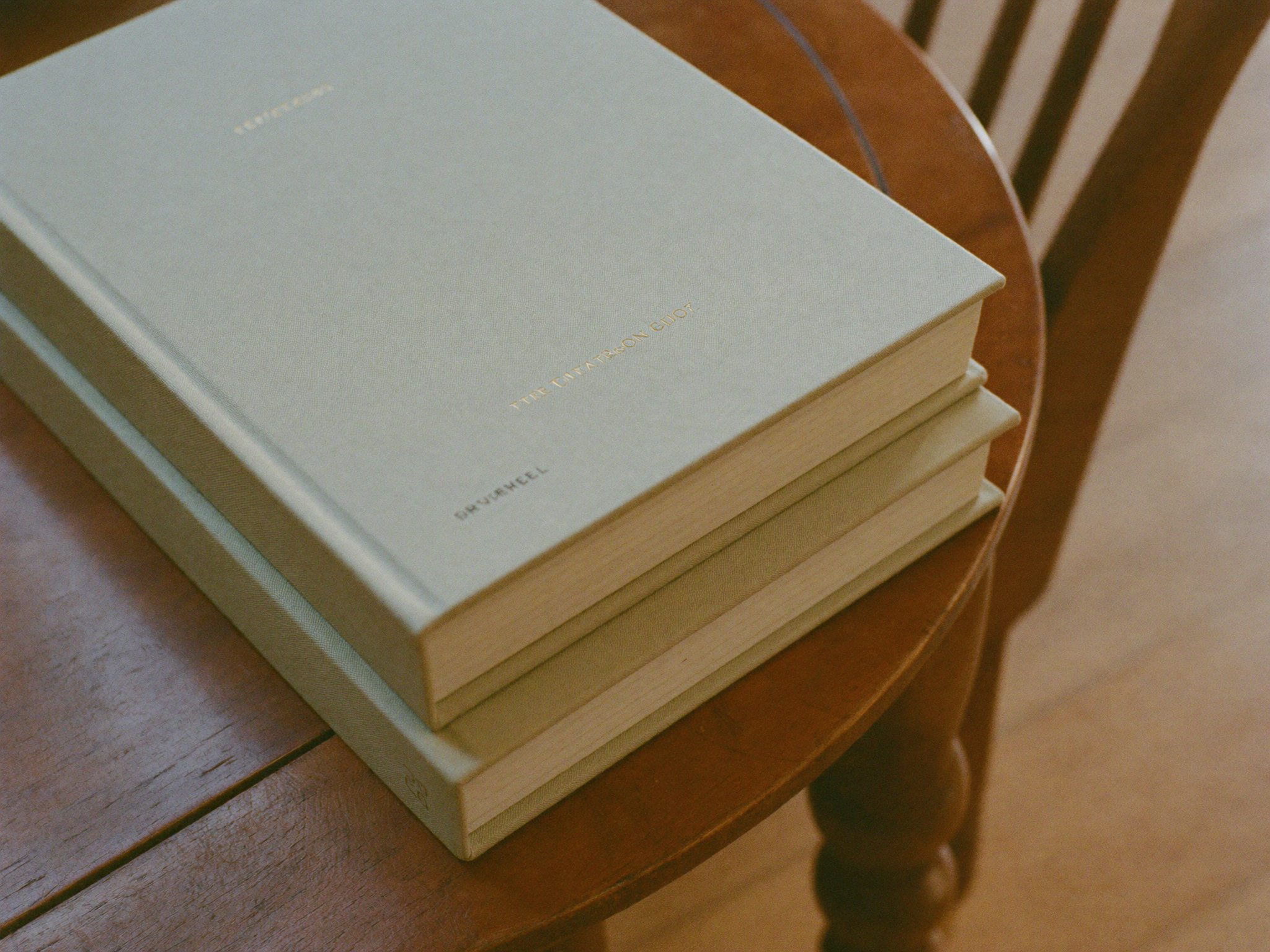
A curated collection of books distilling each program into print — for readers, for gifting, for the shelf. On Sleep opens the series today — further volumes join through 2027.
See the books →The free check — twelve domains, fifteen minutes, your baseline.
Take the free check — 15 minutes
Each program, distilled into a book — the essential arguments and protocols, edited for reading. Published online, kept current, read in your secure library.
The Sleep Program as one continuous read: the science of the night in plain language, and the method for a plan that is yours.
The Kindle Edition, bought through Amazon — read it on your e-reader or in the Kindle app, like any book you own.
The Digital Edition as PDF + EPUB, yours forever — each copy personally watermarked with your name.
Included with membership: always the latest edition, revised as the evidence changes, on every device you sign into.
The Sleep Program as one continuous read. On Sleep walks through the science of the night in plain language — what your brain actually does while you sleep, why the modern world quietly dismantles it, and which levers genuinely move it. It closes with the method: a measured, personal plan you build chapter by chapter, honest about what doesn’t work.
Read on your Kindle or in the Kindle app.
PDF + EPUB. Download and keep — personally watermarked with your name.
Included with membership. Always the latest edition, on every device.
Thirty-three lessons that walk you through the work — film and narrated audio, protocols applied step by step, a baseline week and a measured personal plan.
See the program →The deeper science in full chapter essays — the material the lessons distil, with complete references and notes. [CONTENT: extra verdieping]
{{ cxProg.promise }}
{{ p.b }}
{{ m.goal }}
{{ cxProg.planBand }}
This program includes a practical weekly template that assembles its protocols in one place. You see the structure here; members receive the exact sessions, timing, progressions and decision rules.

{{ cxProg.mediaBody }}
Follow the main line, or open the optional deep dives for the underlying science. Recovery tools — light, heat, cold, HRV — are framed honestly: what they do, for whom, and when they’re not worth it.
{{ sl.text }}
Theory teaches and practice trains — a few well-chosen tools support both. For this course we curate what genuinely helps, when it’s worth the money, and the exact model we’d buy ourselves — available directly from the program.
Supplements are the smallest lever in this course — behaviour always comes first. Alongside the lessons you’ll find a short, curated list for this program: what, why, dose, timing — and just as important, what to skip.
Some levers sit outside the daily lessons — heat, cold, light, breathwork, tests and clinical conversations. For this course we rank which are worth your time, what the evidence actually supports, and what to leave alone.
{{ cxProg.closingBody }}
{{ cxRead.introGoal }}
A short, freely accessible pilot made with Daniel in ElevenLabs. The complete lesson remains part of the member library.
{{ cxRead.publicVoiceSampleEl }}{{ b.p }}
{{ b.p }}
{{ b.p }}
{{ b.p }}
{{ b.p }}
Clear, useful thinking on sleep, metabolism, strength and the systems that shape how well you age. Sources included. Hype left out.
The free check scores all twelve domains in about fifteen minutes.
Take the free check →
{{ art.dek }}
The free introduction ends here. Members receive the full episode, chapter navigation, editorial show notes, transcript highlights and the complete premium podcast library.
Explore Series Membership →{{ n.p }}
“{{ t.line }}”
{{ b.p }}
{{ b.p }}
This deep read continues with the complete evidence map, practical decision framework, sources and member-only visual explanations. Premium Journal is included with Series Membership.
Unlock Premium Journal →
Begin with the free check. Add your personal report, choose one released course for a year, or join the complete Series with Premium Journal and premium podcasts included.
The Longevity Series is an education company. We take what the research actually shows about how people age — and what can be done about it — and we teach it plainly, to people who are not scientists.
Most people, in wealthy countries, will spend the last ten to fifteen years of their life in decline. Not dying — declining. Losing strength, losing independence, losing the things that made the years worth having. Globally the gap between how long we live and how long we live well is about 9.6 years. In the United States it is 12.4.
That gap is not fate. A substantial part of it is trainable, and most of what moves it is unglamorous, cheap and available to anyone. Almost nobody is taught it. That is the entire reason this company exists.
{{ c.b }}
Most health content fails in one of two directions. It either sells you things the research does not support, or it dismisses anything that has not yet been through a decade of trials. We try to do neither, and it is harder than it sounds.
{{ e.b }}
{{ r.b }}
{{ s.b }}
{{ w.b }}
{{ w.link }}The Longevity Series is published by Spine Store B.V., a company registered in the Netherlands. We are a small team of writers, researchers and clinicians-by-training, and our editorial decisions are made by the people who write the lessons — not by a marketing department, because there isn’t one.
Everything on this site is educational. It is not medical advice, it does not create a doctor-patient relationship, and it cannot account for your history, your medication or your risks. If you have symptoms, a diagnosis, or you are considering stopping or starting a treatment, that conversation belongs with a physician who can examine you. We will say this often, and we mean it every time.
Fifteen minutes. Twelve domains. No account, no card.
Take the Longevity Check →
{{ sci.dek }}
{{ b.text }}
{{ b.text }}
The free check scores all twelve domains in about fifteen minutes.
Take the free check
We are collecting the first public experiences now. Praise is welcome, criticism is useful, and neither is edited into something it was not.
Share whether the twelve-domain view helped you see a useful next step.
Tell us what you understood, applied or would want improved.
Review the listening, reading and member experience as honestly as the content.
{{ r.body }}
Reviews will be accepted only from people with an account who have used the check or a program.
The review policy does not exchange discounts or perks for positive feedback.
Members trust the Series because it never sells fear or overpromises — and says plainly when a doctor, not a course, is what you need.
Start with the free check. Twelve domains, fifteen minutes, your baseline.
Take the free check
For most people, the final ten to fifteen years are years of decline. Five short emails on why that happens, why it isn’t fixed — and exactly where to start changing it.
That’s the whole idea — the five-day course is the easiest way in.
Build an accurate model first — you can’t fix a system you don’t understand.
Find where you actually stand — measured, not remembered. That’s the free check.
Pull the levers that matter, in order of leverage — not the ones easiest to buy.
Make it survive a busy week, a holiday, a bad month — that’s where results live.
Lifespan is how long you live. Healthspan is how long you live well — the years before decline sets in across the things that matter most: your body, your mind and your mood. Most of medicine tracks the first number. Longevity is about closing the gap between them.
Two people can reach the same age by very different roads. One coasts down a long, slow slope for decades. The other stays near the top — active, capable, themselves — and then declines quickly and late.
The shaded area on the chart is the prize: the extra years lived in good health.
Modern medicine is one of humanity’s great achievements — and it is built for a particular kind of problem. If you break a leg, catch pneumonia or have a heart attack, the system moves fast and works brilliantly. Deaths from infection and injury have collapsed over the past century. That is the medicine most of us grew up trusting, and it deserves that trust.
But the diseases that now end most lives don’t behave like broken legs. Heart disease, cancer, dementia and type 2 diabetes build silently for twenty, thirty, forty years before a diagnosis. The first chest pain is not the beginning of the disease — it is closer to the end of a long, quiet process. A system designed to respond to events will, by its nature, arrive late to processes.
You can see the mismatch in ordinary care. A standard check-up asks whether you have a disease today — not how fast you are moving toward one. A cholesterol panel is judged “normal for your age” rather than optimal for your future. Blood sugar has to cross a diagnostic line before it becomes anyone’s problem, even though the damage of insulin resistance starts years earlier. None of this is anyone’s failure; it is what the system was built to do.
The opportunity — and it is genuinely new — is that the slow diseases are the ones most open to influence. Because they take decades to build, decades are available in which to change their course. That is what proactive medicine, and this platform, are about: understanding the processes early, measuring where you stand, and steering while steering is still cheap.
Not rivals — two halves of one whole. One rescues you on your worst day; the other works on the ten thousand ordinary days before it.
Trauma surgery. Antibiotics for a raging infection. A catheter opening a blocked artery within the golden hour. This is medicine at its most heroic, and nothing on this platform substitutes for any of it.
Its logic is the event: something breaks, medicine responds, and the response saves lives every single day. Its structural limit is timing — it can only act once there is something to react to.
The complement, not the replacement: attend to the decades before the event. Know your risk factors early. Track the markers that predict the four slow diseases. Build the physical reserve — fitness, strength, metabolic health — that decides how you weather everything else.
Its logic is the trajectory: risk compounds quietly, so small early corrections beat large late ones. Most of the work is education and habit — which is why it can start today, without a prescription.
Nearly all of us, if we live long enough, are eventually limited by one of four groups of chronic disease. They build quietly over decades — which is exactly why early action works so well.
Atherosclerosis: cholesterol-carrying particles lodge in artery walls and build plaque over decades, until a rupture causes a heart attack or stroke. It remains the world’s leading cause of death — and it starts far earlier than most people assume; early plaques are found in people in their twenties.
It costs good years twice over: suddenly, through heart attack and stroke, and slowly, as stiffened vessels and a weakened heart shrink what you can do long before any event.
The evidence for prevention here is the strongest of the four. Blood pressure, LDL cholesterol, smoking, fitness and body composition each move risk substantially — and all five are measurable and trainable.
Not one disease but hundreds: cells accumulate mutations, escape their normal controls and grow where they shouldn’t. Risk climbs steeply with age because mutations accumulate with time.
It is the second-largest cause of death, and treatment — even when successful — often takes a lasting toll on energy, strength and function. The years around a diagnosis are rarely fully returned.
Prevention here is real but partial: not smoking, keeping metabolic health (obesity and insulin resistance are linked to more than a dozen cancers), limiting alcohol, and — above all — screening. Early detection changes survival more than almost anything else you control.
Alzheimer’s and related dementias: proteins misfold and accumulate, synapses fail, and cognition erodes. The process begins fifteen to twenty years before the first symptom.
It is the disease people fear most, because it takes the person before it takes the body — years of dependence, for the patient and for the family. Per case, it costs more good years than almost anything else.
There is no proven cure, but risk is genuinely modifiable: what protects the heart protects the brain. Exercise is the strongest known lever; hearing care, sleep, blood pressure, metabolic health and social connection all show meaningful associations in long-term studies.
Insulin resistance sliding toward type 2 diabetes: cells stop responding properly to insulin, blood sugar and fat handling deteriorate, and the liver quietly accumulates fat. Most people live with it unknowingly for a decade or more.
On its own it erodes energy and function — but its real cost is as an accelerant: poor metabolic health measurably raises the risk of all three diseases above. It is the multiplier.
It is also the most reversible of the four. Muscle is the body’s largest consumer of glucose, so strength and aerobic work act directly on the mechanism; diet quality, sleep and body composition do the rest. Remission of early type 2 diabetes through lifestyle change is documented in controlled trials.
There is no secret pill, and there are no forty things to do. Across decades of research the same handful of levers keeps carrying the result — and one of them stands above the rest. In large cohort studies, moving from low to even moderate cardiorespiratory fitness is associated with a reduction in all-cause mortality that no medication matches. Exercise is not one health tip among many; it is the closest thing to a longevity intervention we have.
We break it into four trainable capacities. None requires an athletic history; all are buildable at any age, and each protects something distinct about your last decades.
Long, easy, conversational-pace work — the kind you could sustain while talking. It builds the mitochondria and fat-burning machinery everything else runs on, and it is the foundation of metabolic health: an engine that clears glucose and fat efficiently, even at rest.
It is unglamorous, and it is the highest-volume item on the list — which is exactly why it works. The dose that shows up in the research is roughly three to four hours a week, built up gradually over months.
The ceiling of what your heart, lungs and muscles can deliver at full effort. In long-term cohort data it is one of the strongest single predictors of lifespan we know of — in some analyses stronger than smoking status — because daily life keeps demanding a fixed amount of it while your ceiling falls with age.
The stairs that wind you at fifty are the stairs you cannot climb at eighty — unless the ceiling is raised. It is trained with short, hard intervals: a few minutes near your limit, repeated, once or twice a week, on top of a solid base.
Muscle is not cosmetic tissue; it is the organ of independence and the body’s largest glucose sink. From mid-life onward you lose it steadily unless you actively keep it — and grip strength, a simple proxy, tracks with mortality across dozens of large studies.
Everything you want to still be doing at eighty — carrying groceries, rising from a low chair, catching yourself on a kerb — is a strength act. The evidence supports two to three sessions of progressive resistance work a week, at any starting level; trials show meaningful gains even in people in their nineties.
Balance, coordination and control: the capacity that decides whether the other three stay usable. Falls are a leading cause of injury death past seventy-five, and a broken hip is one of the sharpest turning points a healthspan can take — the year after one is often the year independence ends.
Stability is also what lets you train hard without injury: control first, load second. It responds quickly — balance and mobility work measurably reduces fall risk in trials — and it costs minutes a day, not hours.
The most argued-about lever, and the one where honest evidence is least dogmatic. What survives scrutiny is unglamorous: adequate protein (more than most people eat, especially past fifty), mostly unprocessed food, energy intake matched to need, and blood sugar that doesn’t ride a rollercoaster all day. No named diet consistently beats those fundamentals in trials.
The right pattern is personal — driven by your metabolic numbers, your preferences and your life — which is why we teach principles and measurement rather than rules.
The recovery window every other lever depends on. Chronically short or broken sleep measurably worsens insulin sensitivity, blood pressure, appetite regulation, mood and memory — all four slow diseases touch it.
It is also highly trainable: consistent timing, morning light, a cool dark room and a protected wind-down move most people further than any supplement. And for chronic insomnia, CBT-I — not medication — is what every major guideline recommends first.
The pillar most longevity plans skip — and by some of the longest-running cohort evidence we have, among the most decisive. The quality of relationships in mid-life predicts late-life health and satisfaction remarkably well; loneliness carries a risk burden comparable to established physical risk factors.
This is not soft advice bolted onto a hard-science platform. Purpose, connection and mental health decide whether long years are worth having — and they respond to deliberate work, just as fitness does.
You cannot steer what you do not measure. A short panel — blood pressure, LDL cholesterol, fasting glucose and HbA1c, plus body composition and a fitness marker — tells you more about your next twenty years than any wearable score.
The point is not data for its own sake: it is finding your personal leverage early, tracking whether what you do actually works, and bringing better questions to your physician. Measured, not guessed — that is the whole method.
Most of this industry sells hope. We grade every intervention on the strength of the actual evidence — and we say so plainly when something popular, expensive or well-marketed simply doesn’t hold up. That honesty is the whole point.
Large, repeated, well-controlled evidence. Movement, sleep regularity, morning light, strength. The unglamorous things that actually move healthspan.
Promising but smaller or mixed evidence, or useful only for some people. Worth an honest personal experiment — measured against your own baseline.
Thin, inconsistent or preliminary evidence. It might help a little; it isn’t where your effort or money should go first.
Marketing far ahead of science. We name these — the expensive panels and gadgets — so you can keep your money.
The cheaper the intervention, the stronger the evidence tends to be. That’s inconvenient for anyone selling a €2,000 device — and it’s exactly why we rank honestly.
Health behaves like interest: the earlier you start, the more it compounds. Acting early lets you build reserve — a physical and mental buffer — long before you need it. You can’t change your genes, but you can change your trajectory, and the best time to change it is always sooner.
Go deeper into the ideas, systems and practical levers covered across The Longevity Series. Every page is educational and does not replace personal medical care.
This page is for education, not medical advice. It doesn’t diagnose, treat or replace your physician — always discuss health decisions, symptoms and screening with a qualified professional.
{{ curDomain.science }}
{{ curDomain.essay1 }}
{{ curDomain.essay2 }}
{{ a.t }}
{{ l.why }}
Your free scores show where you stand. The personal report explains the pattern behind them and turns it into a realistic 90-day order of action.
We’ll email your score, your first priority and one useful next step for your lowest domain.
Share the free check, not your personal scores. Your private link lets us measure which invitations help the Series grow.
{{ recBody }}
One thread runs through your numbers: {{ repChainLow }}. Domains are coupled — the chain below tends to move together. Steady the first links, and the rest lift with them.
{{ d.meaning }}
{{ d.mech }}
{{ d.science }}
Ordered by leverage for your scores: each phase builds on the one before it. Start with your lowest domain — the early moves there tend to lift the rest.
{{ g.tagline }}
Each program, distilled into a beautifully produced book. On Sleep arrives first — members get first access.
{{ curProg.promise }}
{{ p.b }}
{{ m.goal }}
{{ curProg.planBand }}
Every lesson is written to be studied and narrated in studio quality — listen on a walk or read at your desk. Functional visuals carry the key concepts; your progress syncs across both.
Follow the main line, or open the optional deep dives for the underlying science. Recovery tools — light, heat, cold, HRV — are framed honestly: what they do, for whom, and when they’re not worth it.
Theory teaches and practice trains — a few well-chosen tools support both. For this course we curate what genuinely helps, when it’s worth the money, and the exact model we’d buy ourselves — available directly from the program.
Supplements are the smallest lever in this course — behaviour always comes first. Alongside the lessons you’ll find a short, curated list for this program: what, why, dose, timing — and just as important, what to skip.
Some levers sit outside the daily lessons — heat, cold, light, breathwork, tests and clinical conversations. For this course we rank which are worth your time, what the evidence actually supports, and what to leave alone.
Waitlist members get first access and founding pricing — and Series members receive every program as it releases, at no extra cost.
{{ b.text }}
{{ b.text }}
{{ cl.toolBody }}
{{ cl.step }}
{{ plan.heroSub }}
{{ plan.heroNote }}
{{ plan.daily }}
{{ p.b }}
{{ plan.ctaBody }}
Every lesson starts with the why: what the research actually shows, explained with nuance — never hype, never a lecture.
Then the how: concrete, realistic protocols — matched to your situation, whether you're troubleshooting or optimising.
Every lesson ends with one concrete action. Small steps, compounding weekly — that's how change sticks.
A protected weekly template turns the course into a practical rhythm. Members receive the exact schedule, timing, progression and decision rules after their access is confirmed.
Expandable science sections under each lesson — the glymphatic system, cortisol rhythms, CBT-i principles — for those who want the full picture.
Light therapy, sauna & cold, guided relaxation, HRV tracking — what each tool does, who it's for, and how to use it safely. No gadget worship.
Every protocol, checklist and worksheet from all seven modules, designed for print — the baseline log, the caffeine deadline card, the bedroom audit, and your one-page sleep plan. Made to live on a nightstand, not in a tab.
Most of us treat sleep as the thing that happens when the day is over. The leftovers. The part of life we trade away first when work piles up, when the series gets good, when the alarm demands it. Underneath that habit sits a quiet assumption: that nothing much is happening in there anyway.
That assumption is wrong — and correcting it is the single most useful thing this course will do for you. Because once you understand what your body and brain actually do at night, protecting your sleep stops being discipline. It becomes obvious.
Start with memory. As you sleep, the brain replays the day at high speed and moves what matters out of temporary storage in the hippocampus and into the cortex for long-term keeping. This is why a night of sleep after learning something beats another hour of cramming: in study after study, people who sleep on new material remember more of it the next day than those who stayed awake for the same stretch. The filing happens at night, not at the desk.
Then the physical repair. The single largest pulse of growth hormone in your entire twenty-four-hour cycle is released during the first block of deep sleep, in the earliest hours of the night — the body's nightly maintenance window for muscle, bone and tissue. Your immune system uses the same window to produce and calibrate its cells, which is part of why a run of short nights leaves you catching every cold going round.
And the emotional reset. During REM — the dreaming phase — the brain reprocesses the day's emotional experiences while its main stress chemical is turned almost all the way down. You keep the memory; you lose some of the sting. Miss that phase for a few nights and the effect is unmistakable: small setbacks start to feel like catastrophes, and you have less idea why.
None of this is passive. Sleep is not the absence of activity; it is a different kind of activity — one your waking brain cannot perform while it's busy being you. That's the reframe this course is built on: sleep is not the opposite of productivity. It is the production line.
The effects arrive faster than most people realise. Push past roughly seventeen to nineteen hours awake and your reaction time and attention fall to a level researchers have compared with mild alcohol intoxication — no drink required, just a long enough day. A single short night measurably flattens mood and focus the next morning.
The slower story matters more. Even a few nights cut to four or five hours can meaningfully blunt how your body handles blood sugar the following day and tip your appetite hormones toward hunger. Stretched over years, chronically short sleep is consistently linked in large studies with weight gain, raised blood pressure, type-2 diabetes and a weaker immune system — a pattern that surfaces again and again across decades of research.
The point of knowing this is not fear. It's leverage. If poor sleep touches nearly every system, then improving sleep improves nearly every system — energy, appetite, mood, training, focus — simultaneously. There is no other lifestyle intervention with that breadth of return.
Here is the good news that carries the next seven modules: sleep responds to inputs, and the inputs are yours to control. Light, timing, temperature, food, your nervous system's gears — each is a lever, and each has a protocol. This course will teach you to measure where you stand, understand your own machinery, pull the right levers in the right order, and make the results last. Measure, understand, steer, sustain. That's the whole method.
For the next seven days, note three things each morning: when you went to bed, when you woke up, and how rested you feel on a 1–10 scale. No apps required — a note on your phone is perfect. This baseline becomes the reference point you'll measure every improvement against in Module 7.
{{ b.text }}
{{ toolBody }}
{{ curStep }}
The full written lesson continues here, with its protocols, deep dives and your weekly step — everything you need to apply it the same evening.
MEMBER PORTAL
{{ portalSub }}
{{ reportCardBody }}
{{ reportCardCta }}Protocols, checklists and your one-page plan — designed for print. Included with your enrolment.
Open program{{ nextProgBody }}
{{ nextProgCta }}Payments are handled by our payment provider. We never see or store your card details.
Update payment method{{ tax.schemeNote }}
{{ hermes.blurb }}
{{ achat.audience.note }}
{{ achat.note }}
We don’t buy attention — we earn it daily with the best longevity content on the internet, then convert it with a check so useful people can’t help but share it. Reach is automated; trust compounds; acquisition cost trends toward zero.
A global longevity education platform. Assessment, personal report, and in-depth programs — evidence-based, hype-free.
Questions? Ask Nora
DIGITAL MEMBER CARE · ONLINE